
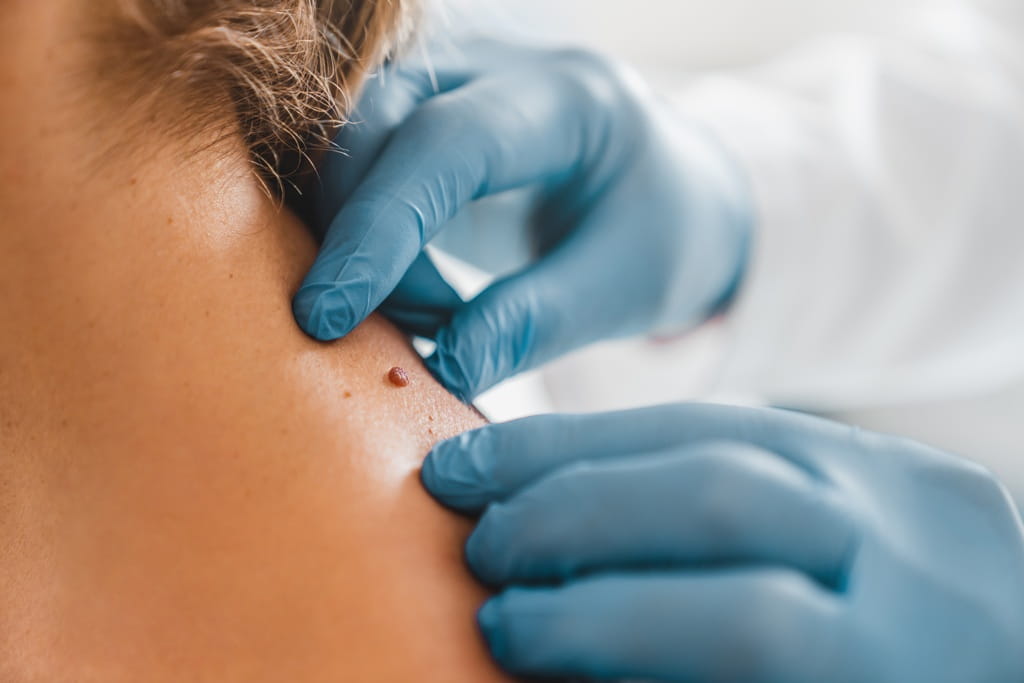
Moles form when pigment-producing cells in the skin (called melanocytes) grow in a cluster instead of spreading out evenly.They can be flat or raised, round or oval, and range in color from pink or tan to dark brown or black. You may see them referred to as a nevus for a single mole, or nevi for a group of them.
If a suspicious mole needs to be looked at, dermascopy can be used to view and evaluate the mole. This non-invasive technique uses a specialized magnifying lens alongside a lightsource, in this case the Dermatoscope, to examine the mole in question. This allows for your dermatologist to better diagnose any underlying issues for moles that might have them. It also means less scarring for those who have benign moles that don’t need any procedure done!
If you’ve ever wondered how much mole removal costs, you’re not alone! The cost of mole removal entirely depends on the type of removal you receive. The cost, on average, is around $150 to $1,500 per mole with out-of-pocket costs. This price depends on the mole’s size, location, and removal method. Moles are typically sent for pathology review which does incur additional costs depending on where they are sent. To see a better breakdown, let’s look at some of the mole removal procedure types and their typical associated costs.
Procedure Types
Mole removal can come in different forms. Depending on where you go for your mole removal, you may have different options available to you for dealing with cosmetic removal of moles or removal of suspicious moles that could hint at other underlying problems.
Surgical Excision
Mole removal through surgical excision is a complete removal method where your doctor uses a scalpel to cut out the entire mole by making an incision around it with a small border of healthy skin. Stitches are then used to close the incision. Local anesthetic is used for removal. Surgical excision typically costs about $100 to $950 per mole, depending on size and location. Your provider will choose this removal option for deep-rooted, suspicious, moles in cosmetically sensitive locations or larger moles.
Shave Excision
Dermatologists provide shave excision mole removal by using a single or double-bladed razor to make the mole flush with surrounding tissue. Sometimes, the surrounding skin is cauterized (lightly burned) or treated with a topical solution to stop bleeding. There is a small chance that the mole will grow back. Shave excision typically costs $100 to $400 per mole. Your provider may recommend this method if you have raised benign moles, as the procedure is often used for biopsy of superficial lesions. There are no sutures involved with this procedure type.
Electrosurgery
Using a small, heated surgical tool, skin care professionals gently remove unwanted tissues from the skin’s surface where benign moles are located. This method seals blood vessels through heating them, which can reduce bleeding at the surface. There are no sutures involved with this procedure type. On average, electrosurgery services are generally provided anywhere from $100-$600. This method is not ideal present day because it does not allow for pathology evaluation of the mole.
Laser Mole Removal
Laser removal uses bursts of light radiation to help remove mole cells. This method is best suited for small, flat, non-cancerous moles. Like electrosurgery, laser mole removal isn’t always the best option because it doesn’t leave any tissue behind for sampling, if recommended. It also may require follow-up visits to ensure the process is complete. Laser removal is usually anywhere from $150-$500 per mole.
Medically Necessary vs. Cosmetic Mole Removal
Even those with healthy skin may have a mole that they’re worried about for one reason or another. Some patients may want a mole removed purely for cosmetic reasons. Whether a cosmetic procedure is your goal or you have concerns about skin cancer from a mole, Southwest Michigan Dermatology is here to help.
It can be difficult for individuals to tell the difference between benign moles and malignant moles. It’s often best to consult a dermatologist for a formal evaluation. Although your dermatologist may use the Dermatoscope device for a close up view of the mole structure, this is not always needed. Be aware that your mole removal costs could vary greatly. A medically necessary procedure versus a cosmetic procedure changes this.
What is Typically Covered By Insurance?
Insurance often covers mole removal if deemed medically necessary. What determines this for a mole is when a mole shows signs of skin cancer, changes in shape or color, or causes persistent bleeding or irritation. Non-suspicious moles may also be removed if they are irritated, bleeding, rubbing on clothing, or cause other symptoms. If you have documentation of these symptoms, it can improve your chances of getting covered! This can be discussed with your dermatologist prior to removal. Occasionally, an advanced benefit notification form may be signed, allowing for the service to be billed to insurance but agreeing for the cost to return back to you if not covered.
Unfortunately, cosmetic mole removal usually won’t be covered by insurance.
Ultimately, you should consult a dermatologist to determine if any of your moles are suspicious. They can help determine if removal should be considered medically necessary or cosmetic.
Schedule An Office Visit for Mole Removal Consultation
The total cost of mole removal can sometimes be intimidating. However, insurance coverage can help with any moles that may present a health hazard. If you have any concerns about your moles or would like removal for cosmetic purposes only, you can count on Southwest Michigan Dermatology. We’ll provide you with a clear understanding addressing your concerns. Reach out today to schedule a consultation! We’ll help you learn more about any moles you might have and the treatment options available to you.