
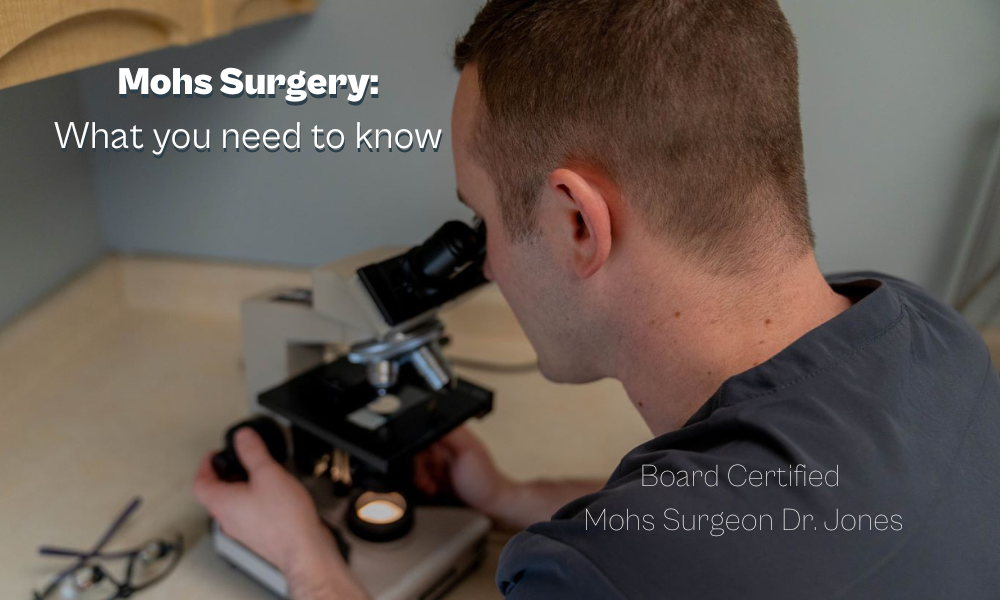
Mohs micrographic surgery, also called Mohs surgery, is a treatment for skin cancer. Through precision cuts, Mohs surgery looks to remove a section of skin one thin slice at a time, checking for skin cancer in each layer. Because skin cancer is on the outer part of our body, it’s only one of a few treatment options, but one that has been trusted as a skin cancer treatment option for over 50 years.
At Southwest Michigan Dermatology, we have board-certified Mohs surgeons ready to help any patient in need. As a great choice for both high risk skin cancers and recurrent skin cancers, Mohs surgery is one that our doctors recommend for patients who meet the criteria to make it a viable option.
Why is it Called Mohs Micrographic Surgery?
The name “Mohs surgery” comes from the person who originally developed the technique: Dr. Frederic Mohs. While studying injectable irritants to evaluate inflammatory response in transplantable rat cancers and normal tissue, he discovered that the thin layer of tissue taken during this technique could retain important data with tumor and cell histology. This technique and the information he gathered was used to develop the procedure now known as Mohs surgery.
Before Mohs Surgery with Southwest Michigan Dermatology:
- A patient comes in for their annual full body skin exam or with a spot of concern. In that office visit a biopsy is taken from a concerning lesion. That tissue is sent to the lab.
- Once we receive the biopsy report back, your provider will look over the results and communicate their recommended treatments.
- A member of our Pathology Department will call the patient to discuss biopsy results and go over the recommended treatment options.
- If the patient chooses Mohs surgery, they will be scheduled for the procedure with one of our Mohs surgeons.
- Due to the layer-by-layer skin removal, Mohs appointments can last a few hours. We recommend that patients plan on being in the office for 2-4 hours. They are welcome to bring what they need during this time, such as a book or snacks.
- After clear margins, the surgeon will discuss the best option for closing the wound, which may include letting it heal on its own, suturing it here in the office, or possibly referring to a plastic surgeon for repair under sedation.
Understanding Skin Cancer And Mohs Surgery
Mohs surgery is commonly used for treating squamous cell carcinoma [SCC] and basal cell carcinoma [BCC]. Mohs surgery is performed in the office and with local anesthetic so patients can eat and drink normally and usually drive themselves home. In this procedure, Mohs surgeons remove skin tissue from the biopsied lesion one layer at a time, reviewing each layer in our in office lab. This layer-by-layer process allows them to remove all the cancerous skin, while leaving as much healthy skin as possible. The surgeon will remove tissue samples until all the cancer is gone. This is why Mohs surgery is generally considered to be one of the best skin cancer treatment options.
Common Skin Cancers Treated
As mentioned in the history of Mohs surgery, it was originally developed to deal with specific cancer cells in the skin, but can be used for a variety of treatments in modern day. Today, it can be used to treat:
- Basal cell carcinoma
- Squamous cell carcinoma
- Early-stage melanoma (at University Hospitals)
- Merkel cell carcinoma
- Sebaceous carcinoma
- Dermatofibrosarcoma protuberans (DFSP)
Recovery, Risks, And Wound Care After Mohs Procedure
As with most recoveries after a surgery, the timing will be different from patient to patient. However, Mohs surgery’s can change as well depending on how much of a wound you have left post surgery. Although surgeons will try to preserve as much healthy tissue as possible during the procedure, there’s always the chance that the patient will need reconstruction options after. This will also change the steps taken for full recovery. As the American College of Mohs Surgery shares, what to expect after surgery includes:
- Knowing when to change your bandages and clean the wound left from surgery.
- Medication information for any prescription or over-the-counter pills or ointments that you can take
- A breakdown of when you can go back to specific activities that would otherwise irritate the wound, such as wearing makeup or exercising.
- Scheduling your follow-up appointments to monitor how everything is healing, and to remove any lingering stitches that you have.
- Our trained dermatologists can provide recommendations to reduce scarring and what you can do to help it fade more quickly.
Schedule an Examination with Us
If you have a spot that you have concerns about and want peace of mind, you can schedule with a dermatologist at Southwest Michigan Dermatology now! We have multiple Mohs surgeons in our office of staff ready to help. We can help with a variety of other skin troubles as well, so make sure to schedule a consultation to discuss them soon!